
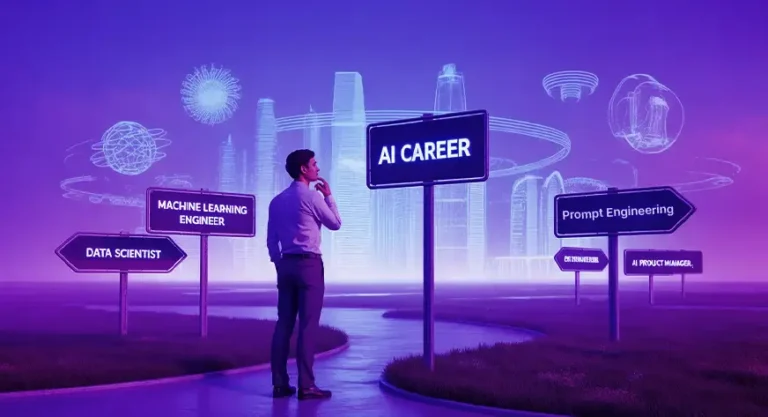
For generations, the path to a successful career was predictable: excel in school, attend a four-year university, and secure a stable job. But for today’s students facing life-changing decisions, that once-clear path is becoming increasingly uncertain.
The explosive rise of artificial intelligence (AI) is not just a tech trend; it is fundamentally transforming the global workforce. Its ripple effects will continue for decades, forcing students and parents to radically redefine what it means to be truly “educated” and “career ready.” The rules have changed, and the learning strategies of the past are no longer enough to face the challenges ahead.
This discussion explores how AI is reshaping education, career planning, and the skillsets students will need to thrive. We will also highlight my Product of the Week, Google Gemini, an AI tool I have found invaluable for understanding emerging technologies and crafting high-quality research.
AI’s Disruption of the Job Market
The conversation about AI and jobs often triggers images of robots replacing factory workers. The truth is more complex — and for many, more unsettling. At risk are not just manual labor roles but also a wide range of white-collar positions once considered secure.
McKinsey Global Institute estimates that by 2030, up to 30% of work hours in the U.S. could be automated, with generative AI accelerating the shift. This means professions involving data analysis, administrative support, and even creative work could be transformed or diminished.
Market research analysts, paralegals, and even some software developers may find their roles radically altered. Any job built heavily on pattern recognition, data synthesis, or routine cognitive tasks is vulnerable. And as AI capabilities expand, the scope of its disruption will grow — making long-term career planning far more complex than in the past.
The Case for a Diversified Educational Portfolio
In such a volatile environment, committing to one narrowly focused major for four years is risky. The job a student begins training for today might look entirely different — or disappear — by graduation.
Adaptability is the new currency of success. A blended education that combines a specialized major with a broad liberal arts foundation creates graduates who are flexible, resilient, and capable of thriving in a shifting job market.
Critical thinking, communication, and problem-solving are human strengths that AI cannot replicate. A computer science major who also studies philosophy, history, and literature will not just be a better coder but also a professional with the vision to see the bigger picture, ask better questions, and convey complex ideas effectively.
This intellectual “portfolio” offers career agility, enabling graduates to pivot confidently as opportunities and challenges evolve.
The 2-Year College Advantage
Four-year universities are not the only — or always the best — route to success. In the AI era, two-year community colleges and vocational institutions are proving to be agile, affordable, and highly relevant alternatives.
These programs often collaborate closely with local employers, tailoring their courses to meet real-world needs. In fields like cybersecurity, data analytics, and advanced manufacturing, a two-year program can lead directly to a high-paying job, often with less debt and faster entry into the workforce.
By focusing on in-demand skills, two-year colleges give students a powerful head start in an unpredictable economy shaped by AI.

19 Responses
Kavacık su kaçak tespiti Evde Güvende Hissettik: Çalışanlar oldukça güven vericiydi. Evde rahatlıkla çalıştılar. https://zekond.com/read-blog/188346
I don’t think the title of your article matches the content lol. Just kidding, mainly because I had some doubts after reading the article.
Can you be more specific about the content of your article? After reading it, I still have some doubts. Hope you can help me.
I don’t think the title of your article matches the content lol. Just kidding, mainly because I had some doubts after reading the article.
Can you be more specific about the content of your article? After reading it, I still have some doubts. Hope you can help me. https://www.binance.info/register?ref=IHJUI7TF
I don’t think the title of your article matches the content lol. Just kidding, mainly because I had some doubts after reading the article.
Your article helped me a lot, is there any more related content? Thanks!
Your point of view caught my eye and was very interesting. Thanks. I have a question for you. https://www.binance.com/pt-BR/register?ref=GJY4VW8W
Can you be more specific about the content of your article? After reading it, I still have some doubts. Hope you can help me.